Secure live broadcasting for communities
Your stage. The audience you chose.
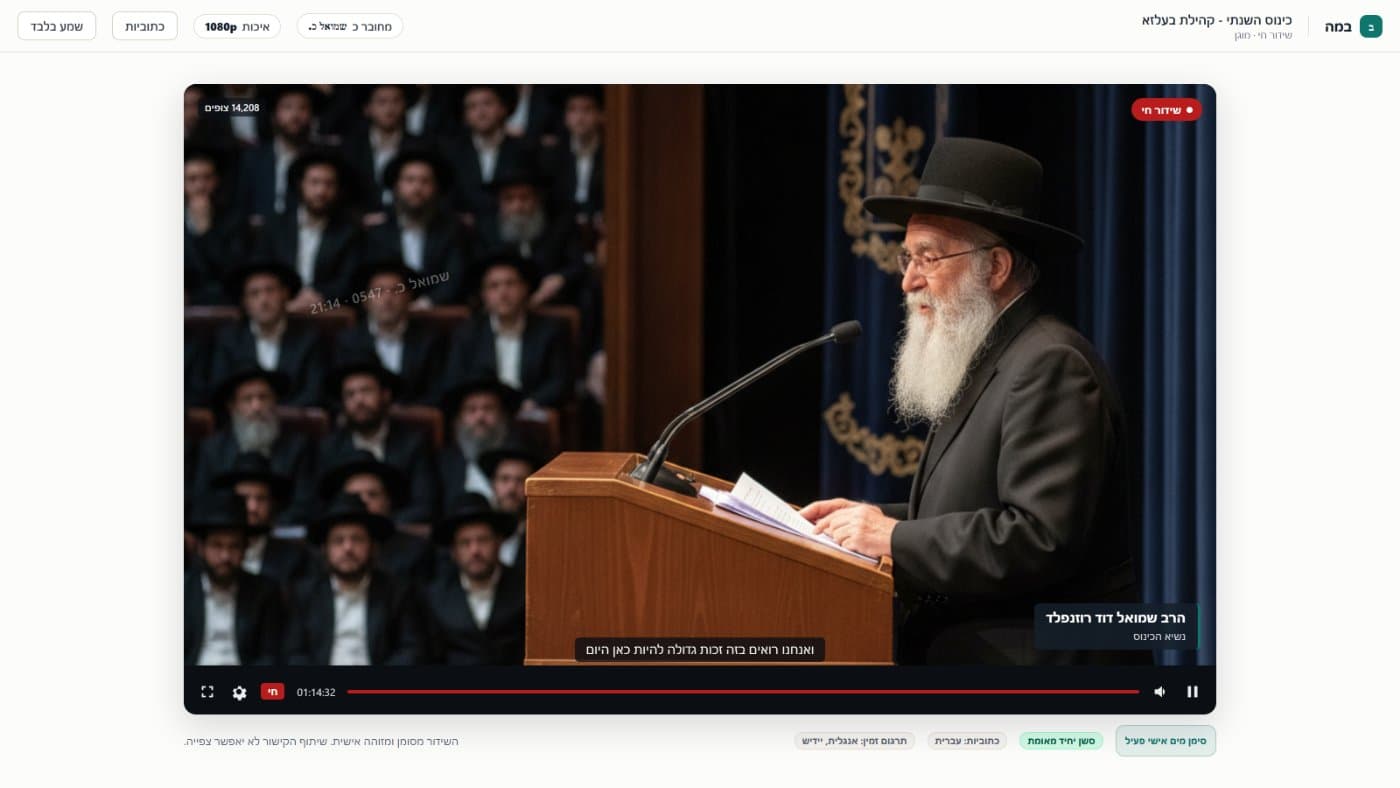
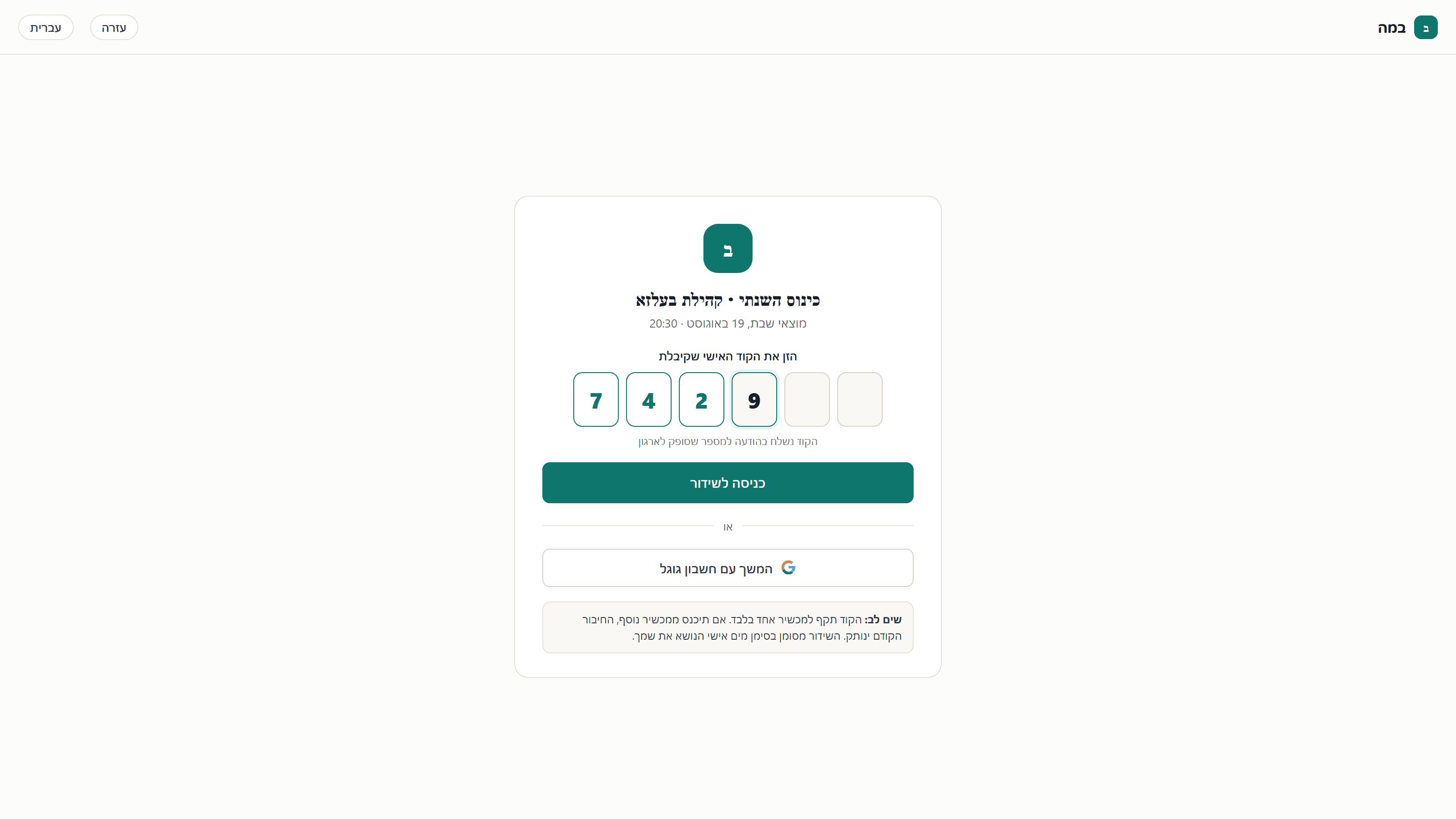
Bima is a live-streaming platform built for guarded communities: every viewer enters with a personal viewing code, no signup and nothing to install, and you decide at every moment who is inside - on filtered networks too.
Works on Rimon, Etrog, NetSpark and SafeTech too - no special setup.
Who it is for
Communities and synagogues
The great occasions of the community reach those who cannot be there in person - the elderly, those who are unwell, and members far from home. Each viewer enters with a personal code received from the community, and the broadcast stays inside the house.
Torah institutions and shiurim
The shiurim and gatherings of the institution are broadcast to students, alumni and supporters anywhere in the world, each entering with a personal viewing code of their own. The administration decides who receives access, and every broadcast is saved as an automatic recording for the institution.
Family celebrations and events
A wedding, a bar mitzvah or a bris - family across the sea is there for the big moments, watching live and simply. Only those who received a viewing code from you see the celebration, and it stays within the family - not on the open internet.
What it looks like
The security is built in
Every Bima broadcast is surrounded by four clear safeguards, so that what is dear to you stays where it belongs:
One device per code
A viewing code works on one device only - opened on a new device? Viewing moves there and the previous device is disconnected.
The name of the viewer on every screen
A personal watermark with the name of the viewer moves across the screen throughout the broadcast - every leak has a name and an address.
Remove a viewer in one click
Decided to remove a viewer? With one click their screen goes dark - within two minutes at most.
A log that cannot be altered
Every action in the system is recorded in a log that can only be added to - never edited, never deleted.
How it works
- 1
Open a broadcast
Create a broadcast in the console, connect a camera from the browser or a professional encoder.
- 2
Issue codes
A personal code per viewer or a shared one per group - send with the watch link.
- 3
Broadcast in peace
The audience enters, the system guards. Whoever was not invited is not inside.
What already works, and what is coming
Two of the three capabilities already work today - the automatic director and live subtitles. The third is marked "coming soon" until it truly works for you.
Automatic director
The frame follows whoever is speaking: a close-up of the rabbi, host and guest in conversation, the wide hall when the crowd sings. Moves like a camera operator, not in jumps. The operator takes over at any moment.
How it will work, and when ›Coming soonClips and an event film, on their own
The director that knows who spoke and when proposes, at the end of the event, short clips (the blessing, the song, the announcement) and an event film of a few minutes. You approve and send them to the authorized audience, with the same watermark.
How it will work, and when ›Live todayLive transcription and translation
A lesson in Hebrew with an audience in New York, Paris and Antwerp: live subtitles in Hebrew and five more languages the viewer chooses, and a full searchable transcript. Off by default, enabled broadcast by broadcast by the organizer.
How it will work, and when ›Frequently asked questions
Does it work on filtered internet?
Yes. Bima is approved on Rimon, Etrog, NetSpark and SafeTech, with no special setup. The viewer types in their viewing code - and watches.
Can a viewer pass their code to someone else?
A viewing code works on one device only, so one code never becomes two screens. If the code is opened on another device, viewing moves there and the previous device is disconnected. Beyond that, the name of the viewer appears on the screen as a personal watermark - every viewing has a name and an address.
What happens with the broadcast recordings?
Every broadcast is automatically recorded and stored in a secure cloud. Downloads happen only through the system, and every download is recorded in the activity log. The recording is there when you need it, and it is always known who downloaded and when.
Do viewers need to install anything?
No. Viewing happens in a regular browser, with no installation, no signup and no details to hand over. Type the viewing code - and the broadcast is on the screen.
What equipment does the broadcaster need?
You can start with a computer and a camera - broadcasting straight from the browser, no extra equipment. For larger events you can connect a professional broadcast encoder, the kind event videographers work with. Both paths feed the same system and the same viewing codes.
Can several broadcasts run at the same time?
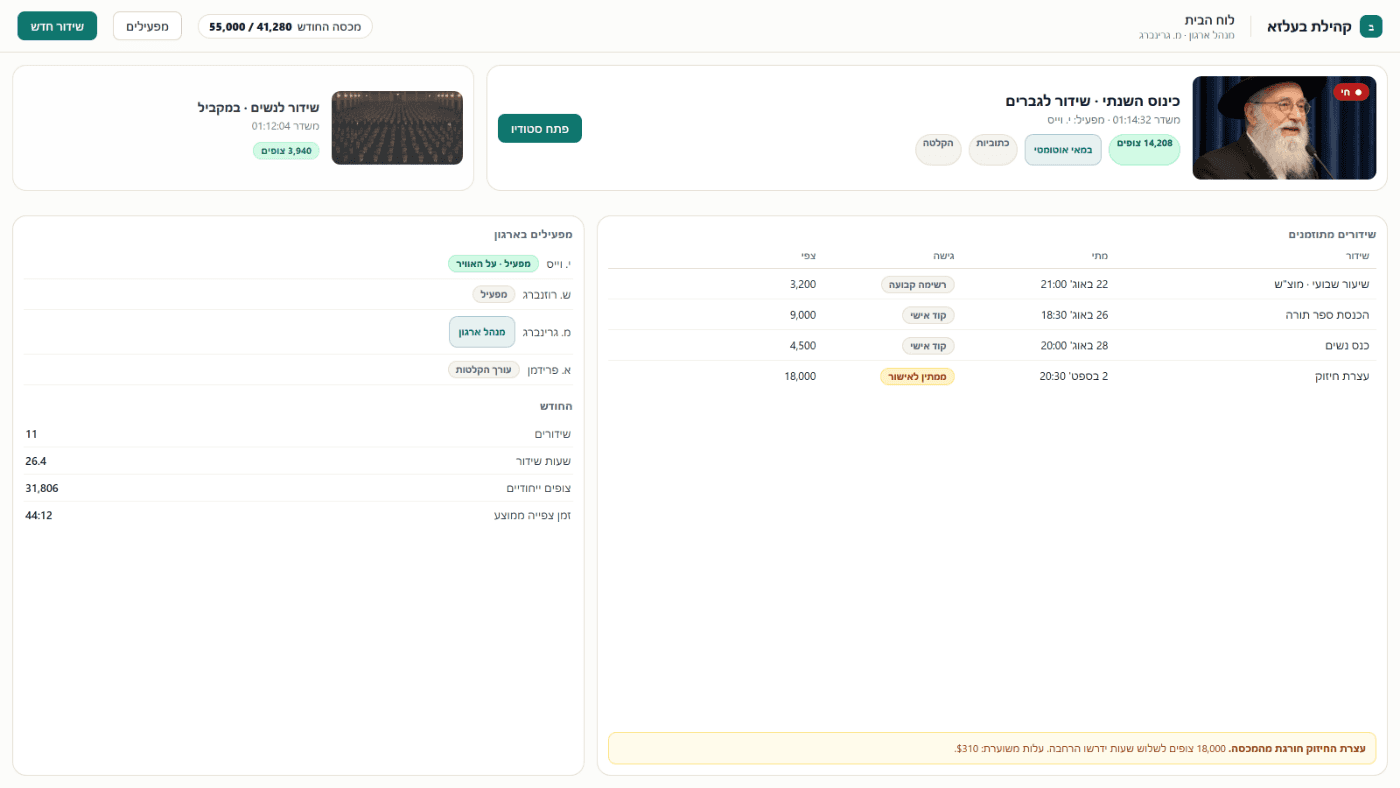
Yes, and how many depends on your plan: each broadcast has its own viewing codes and its own audience, and the number of parallel broadcasts is listed beside every plan on the pricing page. A shiur in the beis midrash and a family simcha can take place at the same hour, without one audience ever meeting the other.
How do we get started?
It starts with a conversation - talk to us and we will understand your needs together. We set up your organization in the system, and you receive a manager console for opening broadcasts, handing out viewing codes and seeing the full picture. From that moment on, the stage is yours.
The next simcha, the weekly shiur or the great gathering - your broadcast can reach everyone dear to you, and stay only with them.
Talk to us